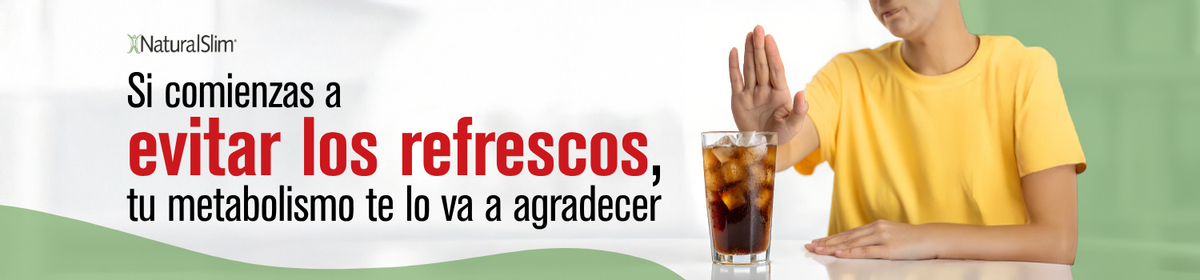
Giving up soft drinks isn't about willpower. Almost always it's about missing information on what that can is really giving your body. And the good news is that it's one of the simplest changes you can make — and one of the ones you notice most — when you want to start taking care of your metabolism.
At NaturalSlim® and with the Dieta 3x1® there are no forbidden foods. But we believe knowledge gives you the power to decide better. And once you understand what's inside a soft drink, even though you could still have one, most people choose to leave it.
What you're asking of your body with every can
Think of your body as an engine. The fuel you put in determines how it runs. A regular soft drink is, above all, sugar dissolved in flavoured water: a single can can carry the equivalent of several teaspoons of sugar.
Frank Suárez called this empty calories: they bring sugar and little else, without the nutrients the body needs. It's low-quality fuel. The occasional one is no big deal; the problem is the daily habit, can after can, almost without noticing.
What about "light" or "diet" sodas?
Many people think switching to a "light" or "zero sugar" drink solves it. They do take out the sugar — but they're still intensely sweet-tasting drinks. And that constant sweet taste can keep the palate used to it and feed the craving for more sweetness through the day.
So swapping a sugary soda for a "light" one is rarely the change that really moves things. The change that matters is a different one: going back to water.
Water really counts (and it has to be real water)
Many people believe they're well hydrated because they drink coffee, juice or soda through the day. But the body tells the difference between water and a flavoured liquid. If a drink has a taste, the body tends to treat it as food rather than as hydration.
Pure water, with no sugar and no flavour, is the simplest, most direct way to hydrate the body. And good hydration is one of those foundations that hold everything else up when you're looking after your metabolism.
A simple guide to how much water to drink
- If you weigh yourself in kilos: your weight ÷ 7 = glasses of about 250 ml per day.
- If you weigh yourself in pounds: your weight ÷ 16 = glasses of 8 oz per day.
You don't have to start all at once. If you're not used to drinking water, begin with 2 or 3 glasses a day and build up gradually. Consistency is what counts.
How to leave soft drinks behind without suffering
Quitting them overnight usually ends in a slip-up. It works better to go step by step:
- Replace, don't just cut. Always keep an alternative within reach: water with a few slices of lemon, cucumber or a few mint leaves. When there's something nice on hand, it costs far less.
- Remove the trigger. If there are no sodas at home, there's no temptation. Most slip-ups happen because the can was right there, cold and within reach.
- Look after the "fizz" moment. Many people miss the sensation of bubbles more than the taste. Sparkling water, with no sugar, usually covers that need perfectly.
- Aim at the habit, not the ban. This isn't about never tasting a soft drink again. It's about it no longer being your everyday drink.
Flavoured alternatives for the days water bores you
If what ties you to soft drinks is having something with flavour in your hand, there are better options within the NaturalSlim® System.
MagicMag® is a magnesium citrate drink powder you mix with water. It provides magnesium, a mineral that contributes to the normal functioning of the nervous system and to a reduction of tiredness and fatigue. Many people use it as their flavoured drink of the day, instead of a soda.
Metabolic Matcha is another option for anyone who wants something warm and flavourful instead of the mid-afternoon soda. It's green matcha tea, without the sugar of a soft drink.
Neither is a magic substitute: water is still the base. But they help make leaving soda feel like gaining something, rather than giving something up.
A small change with a big effect
Every can you stop drinking is a step toward more mindful eating. It isn't the only factor that matters for your metabolism, but it's one of the easiest to change and one of the first you notice.
If you want to organise this and other habits within a plan built for your case, our team of Certified Metabolism Consultants™ at NaturalSlim Europe is here for you. There's nothing to buy to begin: the first step is simply talking to someone who understands your metabolism.


Share:
What to Eat for Your Metabolism Type: Excited vs Passive
The 6 Most Common Causes of Low Energy (and What to Do About Each)